



Kitchen Renovation Process in Australia: Step-by-Step Guide (2026)
The Kitchen Renovation Process Australia homeowners follow in 2026 is more structured than ever. Building standards are stricter. Material lead times vary. Council compliance requirements differ across states. And trade coordination plays a major role in timeline and budget outcomes.
Whether you are upgrading for lifestyle, resale value, or investment purposes, understanding the correct kitchen remodel steps is essential before demolition begins. Proper planning prevents delays, controls costs, and ensures your renovation complies with Australian regulations.
This practical guide explains exactly how to renovate a kitchen in Australia — step by step — so you can move forward with clarity and confidence.
Overview of the Kitchen Renovation Process Australia Homeowners Follow
Every successful renovation follows a clear sequence:
- Define goals and budget
- Site inspection and feasibility assessment
- Design development and layout planning
- Material and appliance selection
- Permit confirmation (if required)
- Final quoting and contract signing
- Demolition
- Rough-in plumbing and electrical
- Cabinet installation
- Benchtop templating and installation
- Splashback and finishing
- Final fit-off and handover
Now let’s examine each stage in detail.
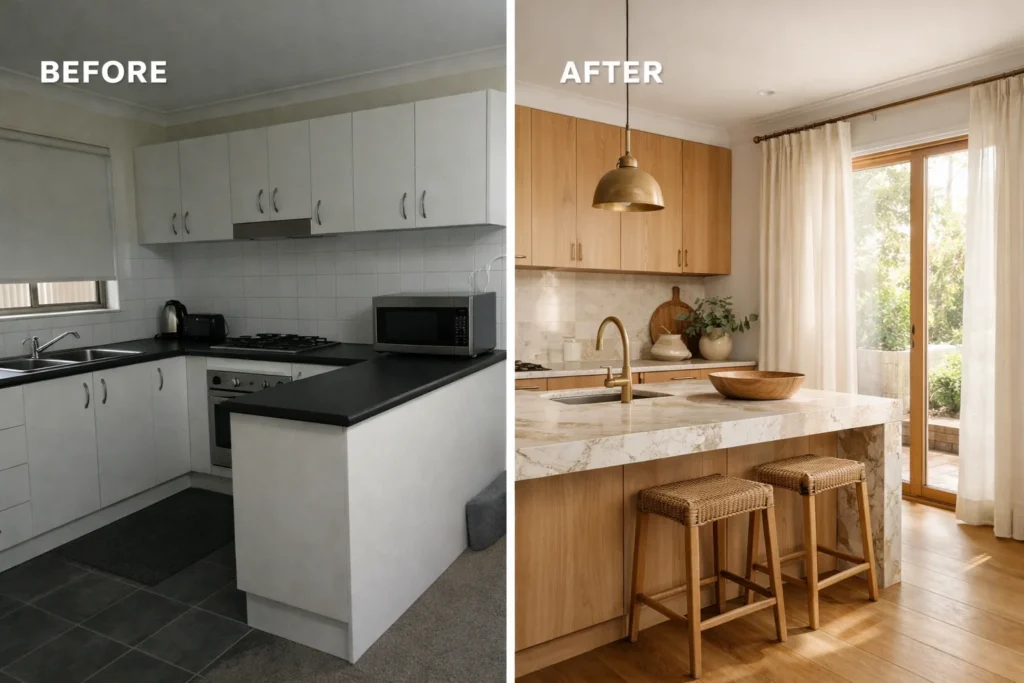
1. Define Your Goals and Budget
Before contacting a builder, clarify your purpose:
- Are you renovating for resale?
- Is this a lifestyle upgrade?
- Are you modernizing an investment property?
- Will the layout change?
Your budget must account for cabinetry, bench tops, appliances, plumbing, electrical, labor, and at least a 10% contingency.
Clear objectives prevent mid-project design changes — one of the most common causes of delay in the kitchen renovation timeline Australia homeowners experience.
2. Site Inspection and Feasibility
A professional inspection identifies:
- Load-bearing walls
- Plumbing locations
- Drainage access
- Gas connections
- Electrical capacity
- Ventilation requirements
Older Melbourne homes often require electrical upgrades or structural review. Identifying these early avoids disruption later.
3. Design Development and Layout Planning
This is the foundation of your kitchen renovation planning guide.
Professional design includes:
- Scaled floor plans
- Cabinet elevations
- Appliance integration plans
- Lighting layout
- Storage strategy
Smart layout decisions improve workflow, storage, and long-term property value.
4. Material Selection
Cabinetry
- Polyurethane finishes
- Laminates
- Timber veneer
- Solid timber
Benchtops
- Porcelain
- Natural stone
- Laminate
- Engineered alternatives compliant with Australian regulations
Appliances
Order appliances early. Some imported models can take 6–12 weeks to arrive.
5. Renovation Permits Australia Requirements
| Renovation Type | Permit Required? | Notes |
|---|---|---|
| Cabinet replacement only | No | Cosmetic update only |
| Plumbing relocation | Usually No* | Licensed plumber required |
| Removing load-bearing wall | Yes | Engineering + building permit required |
| Changing building footprint | Yes | Council approval required |
| Apartment renovation | Strata approval | Body corporate rules apply |
Most standard kitchen renovations do not require council approval unless:
- You remove load-bearing walls
- You alter structural elements
- You modify building footprint
For Victorian homeowners, the Victorian Building Authority renovation guide provides helpful compliance information.
Your renovation company should confirm permit requirements before construction begins.
6. Final Quoting and Contract Signing
Before demolition:
- Ensure scope of works is detailed
- Confirm inclusions and exclusions
- Verify builder insurance
- Review payment schedule
- Sign formal contract
Never proceed without written documentation.
7. Demolition Phase
Demolition includes removal of cabinetry, bench tops, tiles, and appliances. This stage typically lasts 1–3 days.
8. Rough-In Plumbing and Electrical
Trades relocate water lines, waste pipes, gas services, and electrical wiring. Inspection may be required before closing walls.
9. Cabinet Installation
Cabinet installation usually takes 2–4 days. Precision matters because bench top templating depends on final cabinet positioning.
10. Benchtop Templating and Installation
After cabinets are installed, stone suppliers template the benchtop. Fabrication generally takes 7–14 days.
11. Splashback and Finishing
Once benchtops are complete, splashbacks are installed and finishing touches are applied.
12. Final Fit-Off and Handover
This final stage includes appliance installation, plumbing connection, electrical fit-off, inspection, and defect resolution.
Kitchen Renovation Timeline Australia (Realistic Expectations)
| Stage | Estimated Duration | Notes |
|---|---|---|
| Planning & Design | 3–6 weeks | Includes layout approval and selections |
| Material Ordering | 4–8 weeks | Appliances and stone may vary |
| Demolition | 1–3 days | Depends on structural changes |
| Rough-in Services | 3–7 days | Plumbing, gas, electrical |
| Cabinet Installation | 2–4 days | Must be precise before templating |
| Benchtop Fabrication & Install | 7–14 days | Includes templating |
| Final Fit-Off & Completion | 3–5 days | Appliances, plumbing, electrical |
Total timeline: 8–14 weeks for most mid-range projects.
Common Kitchen Remodel Steps Mistakes
- Changing layout mid-build
- Underestimating lead times
- Choosing lowest quote without scope review
- Skipping contingency budget
- Not confirming permits
How to Choose the Right Renovation Company in Australia
- Licensed builder registration
- Domestic building insurance
- Detailed scope documentation
- Transparent communication
- Local references
Kitchen Renovation Checklist
- Finalise design
- Confirm materials
- Order appliances
- Verify permits
- Sign contract
- Confirm start date
Frequently Asked Questions
How long does a kitchen renovation take in Australia?
Most renovations take 8–14 weeks from planning to completion.
Do I need council approval?
Only if structural changes are involved.
Can I live in my home during renovation?
Yes, but expect disruption and limited kitchen access.
What causes renovation delays?
Material lead times, electrical upgrades, structural changes, and trade availability.
How do I avoid cost blowouts?
Use a fixed-price contract, confirm inclusions, and maintain a contingency fund.
When should appliances be ordered?
Immediately after finalising design to avoid timeline delays.
Conclusion: Planning Your Kitchen Renovation Process Australia Project
A well-structured Kitchen Renovation Process Australia project ensures compliance, cost control, and smooth coordination between trades. If you are planning a renovation in Melbourne, explore our Kitchen Renovations Melbourne service page for detailed project insights. You can also review our broader Service Areas to see where we operate across Victoria.
Understanding state compliance requirements is also important. Refer to the official Victorian Building Authority renovation essentials guide for regulatory guidance. If you would like tailored advice for your home, we welcome a structured consultation to discuss your renovation goals and timeline.